
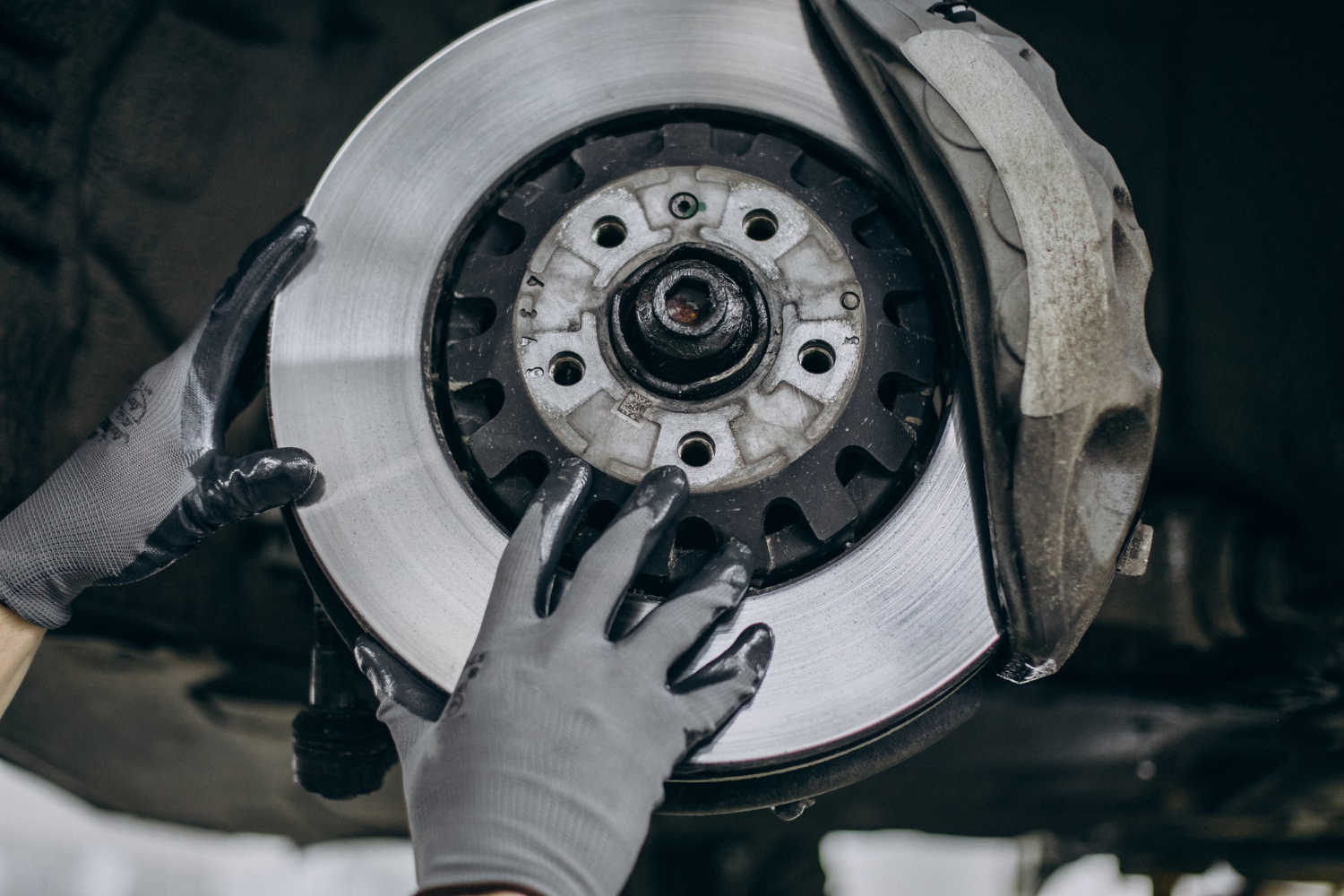
Ideally, a car's brake pads hardly require attention before 25,000 miles. The brake pads may work up to 70,00 miles if you are a smooth driver. The rotors require replacement between 30,000 and 70,000 miles, depending on weather conditions, driving style, and, most importantly, terrain. You will see clear signs if your brake or rear brake pads deteriorate. Therefore, it is essential to pay utmost attention to visible wear and tear and sound while driving and consider brake pads replacement as soon as possible.
Here are six clear signs suggesting you should get the brake pads replaced without further delay.
Watching brake pads pressed against metal rotors or between the spokes suggests that the car's brake pads need urgent attention. If you observe their thickness reduced to less than a quarter-inch, consider a brake pad change. These are visible signs of brake pad replacement.
It is essential to pay attention to unusual noises and sounds while driving. A piece of metal inside the brake pads and rear brake pads makes a squealing noise when the brake pads need replacement. It is purposefully designed to create a high-pitched screeching sound to inform you that it is time for brake pads replacement. So, if you hear a screeching or whining noise while pressing the brake, there is nothing to worry about. The brake pad change will bring the situation to normal. If the brake pads still sound after replacement, the rotors are glazed. Due to excessive braking, the metal may heat up and burn. You can check this yourself. If you see dark rings or blue marks on the rotors, get them replaced along with the brake pads.
The slow-stopping response is a clear sign of brake pads replacement. This is caused by a fluid leak in the car's braking system. As the lubricant reduces friction, the brake pads and rotors are forced to make contact for a prolonged time, building up unnecessary heat. After much effort, they can generate the friction required to stop the vehicle. Therefore, upon observing a delay in stopping, take your vehicle for brake pad change. The mechanic will inspect the brake system and suggest solutions.
When the brake pads and rotors are damaged, they generate vibrations that can be felt across the car. When the brake is pressed, it shakes the vehicle. You can confirm the problem by repeatedly pressing and releasing the brake pad. If the vibration stops after you release the brake pad, it suggests that your car's brake system needs servicing. Consider checking rear brake pads when you get the brake system repaired.
This is an opposite sign of a delayed response from the brake system. However, sudden jerks while engaging the brakes indicate brake pad replacement. Unevenly worn rotors or degraded brake fluid can cause jerks.
In extreme cases, you may see a puddle of lubricant under your car. This suggests a leakage of brake system fluid. If you observe this, it is best to get your vehicle checked at the service centre, as it indicates that your car's brake system needs urgent attention.
Driving with damaged brake pads can be extremely dangerous for drivers and commuters. If you do not get them repaired in time, they may further damage the rotors, brake system, and other vehicle systems. Worn brakes wear down tyres quickly. To stop in time, you will need to slam the brakes more frequently and for a prolonged period. This will inflict damage on the tyres, causing uneven tyre wear. Timely brake pads replacement is essential for the overall health of the vehicle and tyres.
To ensure that your brake pads and rear brake pads last long, avoid hard braking and change your brake pads regularly. Contact BM Automotive Singleton for the best brake pads replacement services in Mcdougalls Hill, Singleton, Branxton, Maitland, and Muswellbrook. Visit their website, bmautosingleton.com.au, for inquiries. You can visit them at 161b Maison Dieu Rd, Singleton, NSW 2330, to inspect your vehicle's braking system. For more information, mail [email protected] or call 02 6571 4400.